
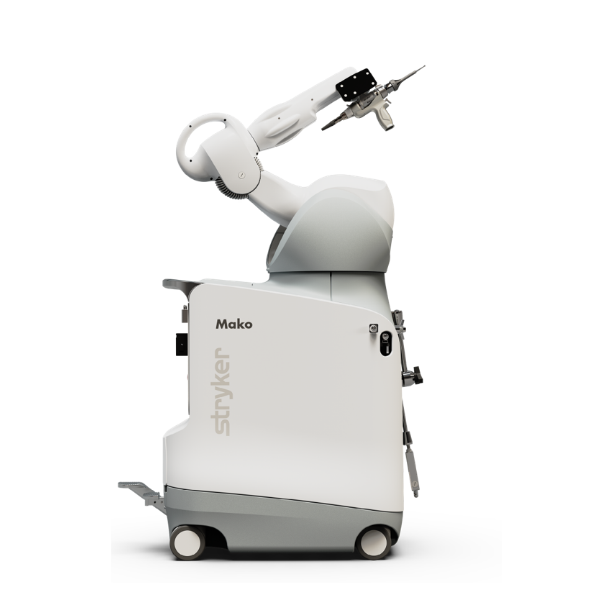
Mako Shoulder is a robotic-arm-assisted technology for reverse shoulder replacement that combines 3D CT-based planning with haptic guidance. It helps surgeons execute bone preparation and implant placement according to a personalised pre-op plan. The technology has been used for over a decade for hip and knee replacements with worldwide success, and it has now expanded to include shoulders.
How does the Mako change surgery?
Mako Shoulder combines three components: implants, planning software, and Mako SmartRobotics. The key change is the shift from purely manual, experience-dependent surgery to a plan-driven and guided process.
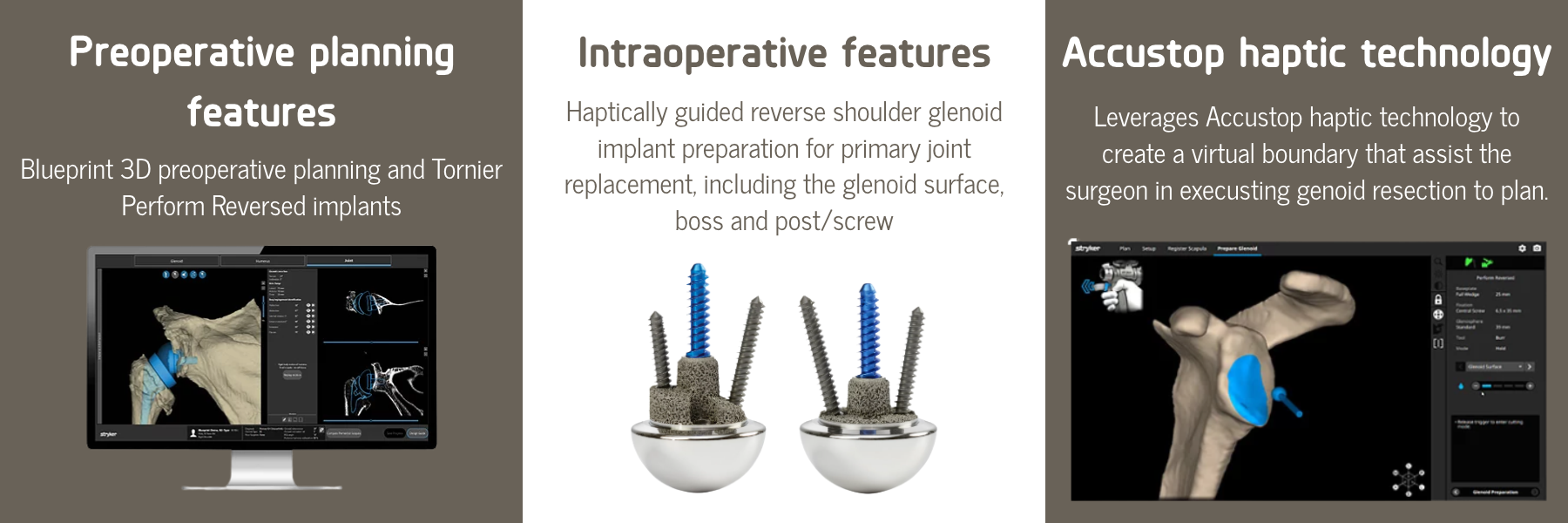
The workflow involves three stages: a CT scan to create the virtual 3D model, a plan using Blueprint software to get the details absolutely correct, and the Mako arm.
In the operating room, the surgeon guides the robotic arm, which uses haptic technology to provide resistance if the surgeon deviates from the planned boundaries.
In a study using bone models, robotic-assisted surgery was significantly more accurate than manual or patient-specific surgery.
The Mako device helps surgeons see, plan and do things very differently.
See: The Blueprint software creates a 3D virtual model from the CT scan, allowing the surgeon to visualise anatomy and implant positioning in ways that plain X-rays cannot show. The software also provides automated 3D measurements.
Plan: The surgeon can create a patient-specific plan for implant size, position, and orientation before entering the operating room.
Do: During surgery, the Mako robotic arm with AccuStop haptic technology provides physical feedback that manual instruments cannot offer. If the surgeon moves outside the planned boundaries for bone preparation, the system provides resistance, helping to protect healthy bone and soft tissue while ensuring precise execution of the plan.
What Conditions is Mako SmartRobotics available for?
Mako Shoulder is currently approved for reverse shoulder replacements, and patients who may be candidates include those with compromised shoulder function who are seeking treatment to reduce pain and improve mobility.
The conditions that typically lead to reverse shoulder replacement include:
- severe arthritis of the shoulder joint
- Irreparable rotator cuff tears or rotator cuff tear arthropathy
- Shoulder fractures
Potential Benefits
The main benefit is more accurate and reproducible implant placement compared to conventional methods. A clinical study has shown that robotic-assisted shoulder surgery allows a surgeon to achieve implant placement that is closer to the surgical plan than non-robotic arm-assisted surgery.
Beyond this, there are numerous recovery benefits that have been noticed by surgeons with robotic hip and knee procedures, such as less pain, faster recovery, and improved function. The benefits of this in shoulder surgery mean patients will be able to get back to regular function much quicker than with traditional methods.